Nourishing your Blood
Let’s talk about Blood - and why It might be the missing piece for how you’re feeling ..
In Chinese Medicine, Blood is considered a vital substance — and it goes way beyond what we learned in biology class. Yes, it keeps your muscles and tissues nourished and hydrated, but it also acts as an energetic vehicle, carrying Qi (your life energy) to every part of your body. Think of it as your deepest source of fuel and calm — feeding you physically, mentally, and emotionally.
so How is Blood actually made ..
This is where it gets interesting. The quality and quantity of your Blood comes from a beautiful interplay of everyday factors. Everything you eat and drink gets transformed into Food-Qi by your Stomach and Spleen. That Qi then travels up to your Lungs, combines with the Qi from the air you breathe, and together — with a little help from your Kidneys — that's what becomes the Blood your Heart circulates around your body.
What that means in practice is that Blood isn't just about eating your greens (though that does help!). It's the full picture — how you breathe, how you move, how well you rest, and how you spend your energy day to day. It’s a reminder that the body is always listening and paying attention, even when you're not.
Why does Blood matter so much?
Blood is a yin substance — which means it has cooling, grounding, stabilising qualities. It anchors your mind, feeds your organs, muscles, skin, tendons, brain and eyes, and it's quietly behind so many things we take for granted: a good night's sleep, being able to think clearly, feeling emotionally steady, and a body that doesn't ache.
When your Blood is in good shape, you feel it. Good energy, rosy cheeks, mental clarity, a calm nervous system — that sense of just feeling like yourself.
And if you're a woman, healthy Blood really is at the heart of so much. It underpins your cycle, your fertility, pregnancy, postpartum recovery, and the transition into menopause. But here's what's worth knowing even if babies aren't on your radar at all — Blood deficiency is also one of the most common root causes of persistent headaches, broken sleep, anxiety, and that deep, stubborn muscle tension that no amount of stretching or magnesium seems to touch.
Sound familiar?
What happens when there isn’t enough blood?
Simply put -
Not enough Blood = less nourishment =Blood deficiency
If fertility or your cycle is your focus, that can mean your ovaries and uterus aren't receiving enough oxygen, nutrients, or hormonal support. If that's not where you're at, the impact tends to show up in other ways — restless nights, tension headaches that keep coming back, muscles that feel perpetually tight or heavy, and a nervous system that feels stuck in a low hum of stress.
Blood deficiency often comes down to not eating enough of the right nutrients, or your body not absorbing them as well as it could. But it can also follow periods of blood loss — think trauma, childbirth, pregnancy, or simply years of menstruation, especially if your periods have ever been heavy. Women are genuinely more prone to this, and it often becomes most obvious at key moments — when you're trying to conceive, postpartum, or heading into perimenopause.

What Blood deficiency can look & feel like-
See if any of these ring a bell:
You struggle to fall asleep, or you wake in the night and can't get back off
Headaches that keep showing up — often dull, or at the end of the day
You feel anxious or on edge, sometimes without knowing why
Occasional palpitations, or just an awareness of your heartbeat
Brain fog, or your memory just isn't as sharp as it used to be
Muscle aches, tension, or a nagging lower back ache that loves a hot water bottle
Feeling flat, unmotivated, or a bit disconnected from yourself
Your mind won't switch off — overthinking, worrying, going over things
Tired all the time, even after a full night's sleep
Periods that are painful, very light, or have become irregular
And some physical clues your body might be dropping:
Pale lips, face, tongue, or nail beds
Dry or dull skin and hair
Nails that break easily
Feeling dizzy when you stand up, or seeing floaters
The good news is there is lots you can do….
Foods That Build Blood
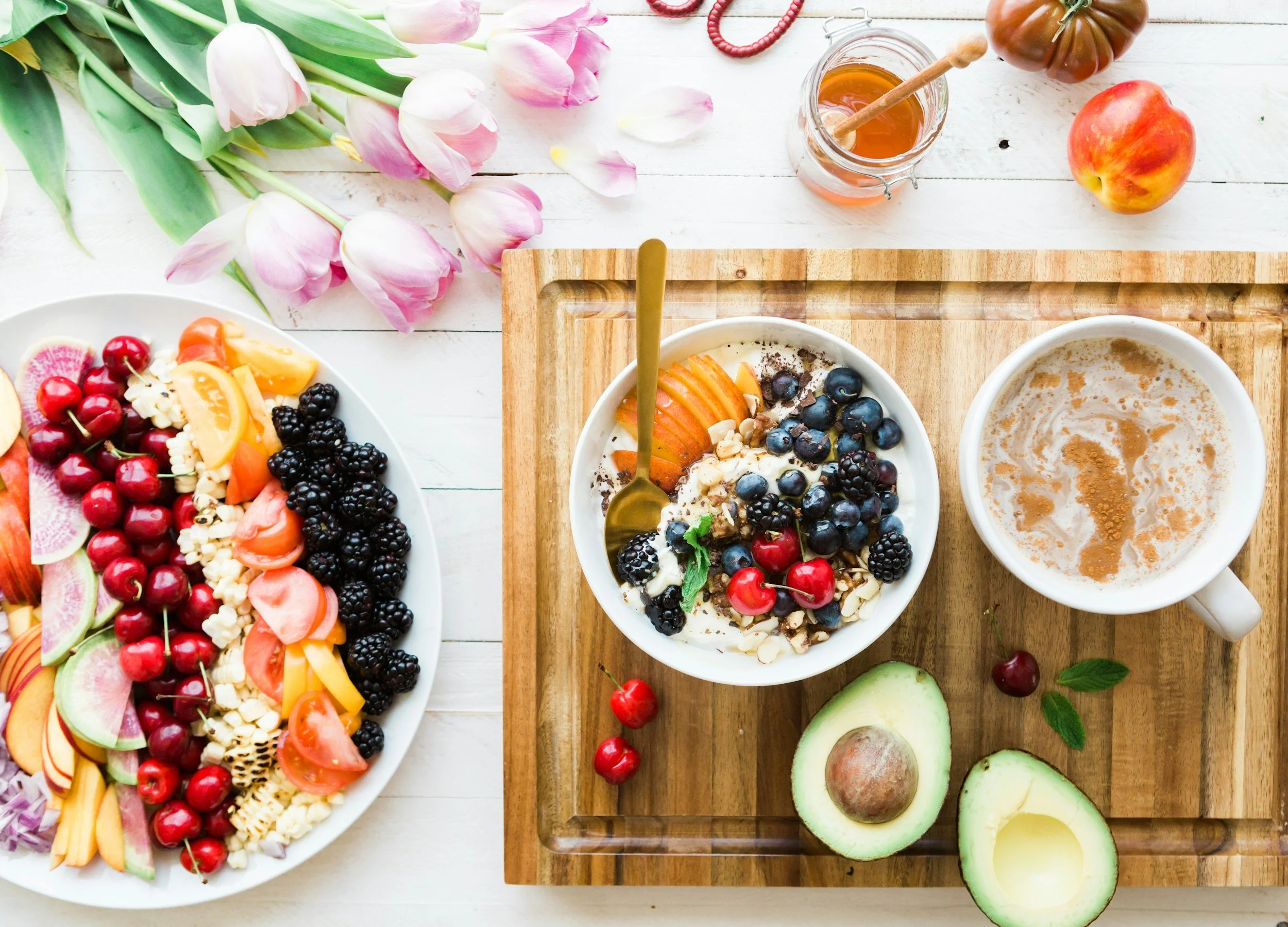
The goal here is warm, nourishing, and nutrient-dense. Think less cold salads and smoothie bowls, more soups, stews and cooked goodness:
Dark leafy greens and chlorophyll-rich foods — spinach, wheatgrass, spirulina
Iron-rich foods — black beans, lentils, tofu, organic beef, lamb, eggs, or chicken liver if that's your thing (good quality supplements absolutely count too)
Dark fruits — blackberries, dark grapes, raspberries, avocado, stewed apples
Vegetables — beetroot, shiitake mushrooms, celery, cabbage
Grains — oats, rice, corn, bran
Natural sweeteners and snacks — blackstrap molasses, figs, dates, goji berries, apricots
Beans — kidney, black, and aduki beans
Nuts and seeds — almonds, black sesame
Fish — oysters, mussels, sardines
Drinks — nettle tea, warm water through the day
Blood tonics like Floradix are worth considering
Bone broth — in Chinese Medicine this is genuinely one of the most powerful Blood builders going
Worth Easing Back On
Cold and raw foods — frozen smoothies, sushi, ice cream, cold salads. Your digestion will thank you for warming things up
Coffee and caffeine — especially if sleep or headaches are already a struggle
Lots of sugar and refined carbs
Heavily processed foods
Small Lifestyle Shifts That Make a Real Difference
Don't skip breakfast. In Chinese Medicine, your Stomach and Spleen are at their most energetic between 7–11am — which makes mornings the best time to properly fuel yourself and support Blood building. A warm, nourishing breakfast really does matter.
Eat regularly and not too late. If you do intermittent fasting, working with an earlier eating window — stopping in the afternoon and starting again in the morning — is much kinder to your digestive energy.
Move your body, but don't overdo it. Gentle, regular movement supports Blood circulation beautifully. But if you're already depleted, pushing hard at the gym can actually make things worse.
Try not to drink lots of liquid with meals — it dilutes your digestive enzymes and makes it harder for your body to extract goodness from your food.
Take sleep seriously. Aiming to be in bed by 9:30–10pm might sound old-fashioned, but deep regular sleep is one of the most restorative things you can do for your Blood. If you're dealing with tension headaches or anxiety, better sleep often shifts these more than anything else.
During and just after your period, postpartum, and while breastfeeding — lean extra hard into Blood-nourishing foods. These are the windows when your reserves take the biggest hit.
Rest is not laziness. Your body genuinely rebuilds during stillness. Give it the chance.
ACUPUNCTURE -Two Acupuncture Points Worth Getting to Know
You don't need to be in clinic to use these — both are easy to find at home and lovely to incorporate into an evening wind-down or even just while you're moisturising your legs.
Liver 8 — On the inside of your knee. Bend your knee and look for the crease that runs from below the knee to the inner leg. At the end of that crease you'll feel two tendons — Liver 8 sits right between them. Great for muscle tension and menstrual health.
Spleen 6 — On the inside of your lower leg. Find your inner ankle bone and measure about four finger-widths straight up — you'll usually land around ankle sock line. This is one of the most used points in all of Chinese Medicine — brilliant for Blood nourishment, sleep, anxiety, and women's health generally.
Just press gently for a minute or two on each side. It doesn't need to be complicated to be effective.
References
Pitchford, P. (2009). Healing with whole foods : Asian traditions and modern nutrition. 3rd ed. Berkeley, Calif. North Atlantic Books.
acupuncture.rhizome.net.nz. (n.d.). Debra Betts - Acupuncture and Acupressure for Pregnancy and Childbirth. [online] Available at: https://acupuncture.rhizome.net.nz/acupuncture/dietary-therapy/blood-deficiency/.